Twelve Women's World Titles, Most of Them Won for Almost No Money
Reanne Evans holds the most World Women's Championship titles in the history of the sport. For most of those years, the prize money attached to winning one was too small to constitute a living.
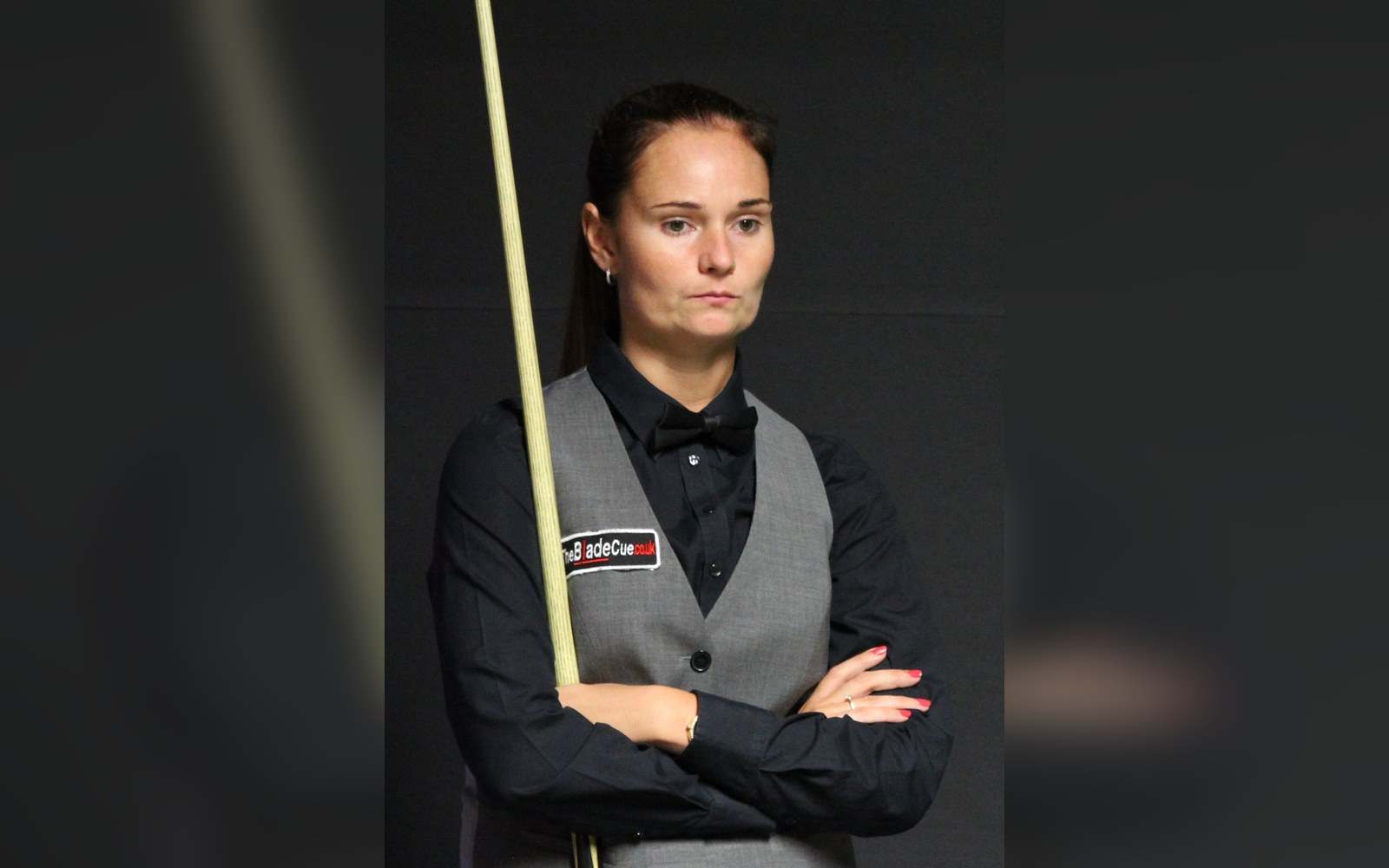
Twelve women's world titles, most of them won when the prize money was close to nothing.
Photo: Reanne Evans PHC 2017-1 · Wikimedia CommonsThe Record and What It Cost to Build
Evans won her first World Women's Championship in 2005 and her twelfth in 2023. Between those two dates she missed the title only a handful of times, dominated a field that had almost no meaningful financial infrastructure and built a record that has no equivalent anywhere in professional snooker — male or female. Twelve world titles against Cliff Thorburn's single world championship, against Ronnie O'Sullivan's seven, against Joe Davis's fifteen spread across an era before the sport was commercially organised at all. The comparison with Davis is the only one that gets close numerically, and Davis was competing in a different universe of money, structure and media attention.
The women's game for most of Evans's career operated on prize funds that would not have covered a mid-ranked male professional's hotel bill at a ranking event. In the early years of her dominance, the World Women's Snooker Tour ran events on budgets that depended heavily on subsidy and volunteer administration. The winner's cheque at the World Championship was, for much of the 2000s and into the 2010s, measured in hundreds of pounds rather than thousands. Evans has been publicly candid, over many years, that she held jobs outside snooker to sustain herself while accumulating a title count that would be considered historically significant in any racket sport or cue sport on earth.

The women's tour has always existed. The budget is the new part.
Photo: Ketut Subiyanto / PexelsThat is not incidental detail. It is the central fact about her career. The titles were real; the financial recognition was not. She competed in an administrative environment where the WPBSA's attention and the bulk of Matchroom Sport's investment were directed entirely toward the men's tour. When Barry Hearn took over WST operations in 2010 and expanded the ranking-event calendar sharply, the women's game did not receive equivalent expansion. The prize-money gap between the men's and women's circuits remained vast through the years when Evans was at her most dominant.
What Has Changed, and When
The shift in the women's game's financial footing has come late and is still incomplete. The World Women's Championship prize fund grew meaningfully only in the early 2020s, when a combination of increased WPBSA investment and the arrival of new events began to raise the ceiling. The 2023 World Women's Championship, the one Evans won at the age of thirty-eight, carried a winner's prize in the low thousands of pounds — transformed relative to the 2005 baseline, but still a fraction of the £500,000 available to the men's world champion at the Crucible. The men's prize money at the top of the ranking list has no equivalent in the women's game; the comparison would not be flattering to make precisely.

The hundred players who lose before the televised stages share a small fraction of the fund.
Photo: Ketut Subiyanto / PexelsEvans also gained a professional tour card on the men's WST circuit in 2013, one of the first women to do so, competing at ranking events against male professionals. She did not sustain a ranking high enough to retain it long-term, which given the structural gap in preparation, resources and match-play volume available to women's players, was hardly a result that needed much explanation. The experiment demonstrated access was possible; it did not demonstrate that access was supported.
The women's game now has more events, better prize money and more broadcast coverage than at any point in Evans's career. Mink Nutcharut holds a women's tour card and has competed on the main tour. Reanne Evans herself was part of the generation that made those improvements arguable in the first place, because a twelve-time world champion being paid almost nothing was an embarrassment the sport could not sustain indefinitely. Whether the argument has been fully answered is a different question. The prize money has improved. The gap has not closed. Evans's record, built across twenty years of competing in a sport that did not pay her adequately for it, stands as both an achievement and an indictment — and it is not clear which of those two things it should be remembered as first.