The Women's Tour Exists, Has Always Existed, and Is Only Now Getting a Budget to Match
Prize money for the World Women's Snooker Championship was measured in hundreds of pounds for decades. The number is finally rising, but slowly.

The women's tour has always existed. The budget is the new part.
Photo: Ketut Subiyanto / PexelsA Structure That Predates the Modern Tour
The World Women's Snooker Tour has been running since the early 1980s, decades before Barry Hearn's Matchroom Sport restructured professional snooker's economics in 2010. For most of that period it operated on a budget so thin that the women's world champion could take home less for a title win than a first-round loser on the men's tour earned before packing his case. Reanne Evans won twelve world titles across that era — a record that has no equivalent in the men's game — and did so against prize funds that would not have covered a month's expenses on the main WST circuit.
The governing structure sat under the World Professional Billiards and Snooker Association (WPBSA), but the women's competition was run with limited central resource and minimal broadcast presence. Its players were professionals in the disciplinary and regulatory sense; financially, most were amateurs in effect. Sponsorship was intermittent, televised coverage rarer still, and the ranking-event calendar — the mechanism that gives a snooker career its economic skeleton — barely existed in comparable form.
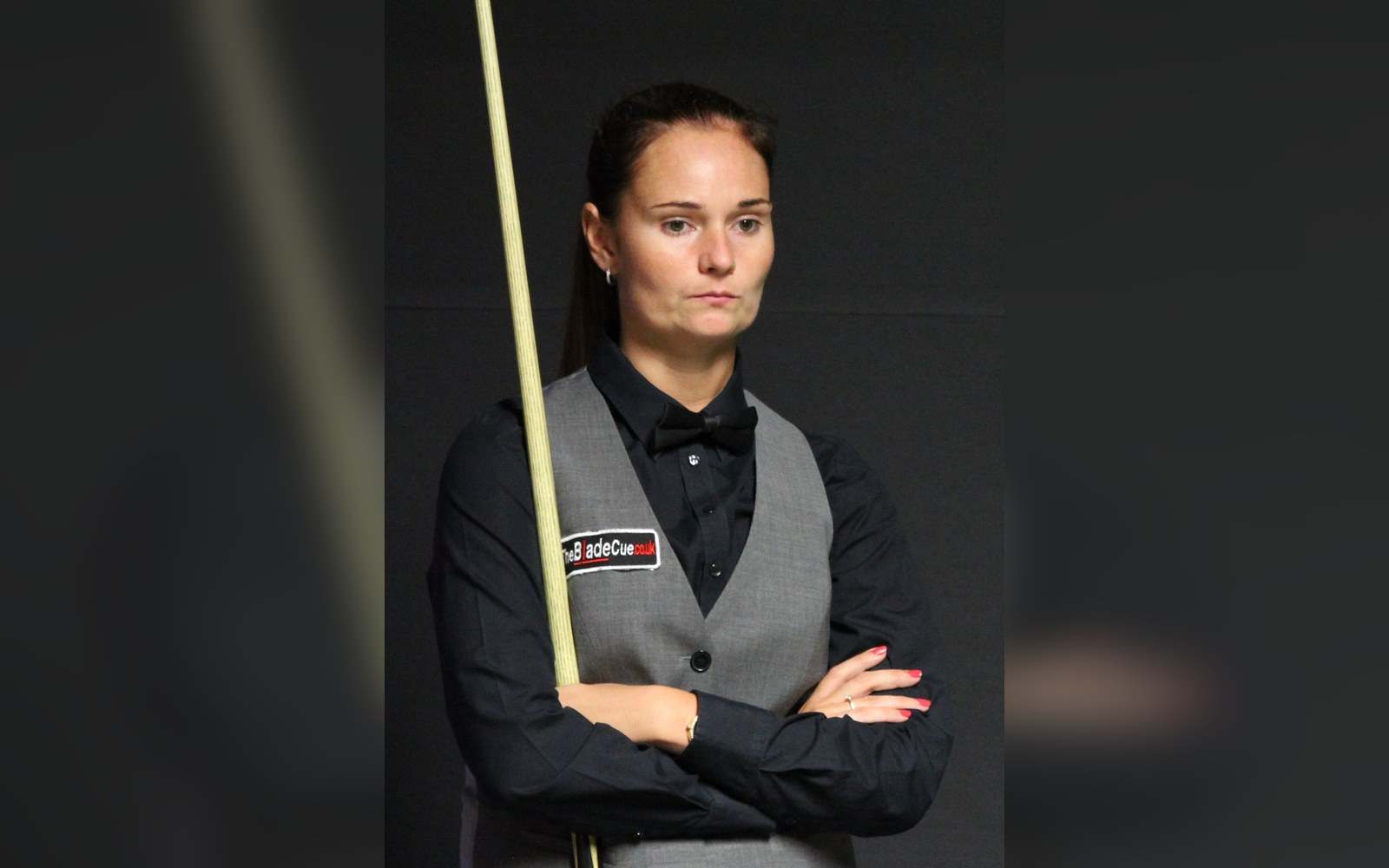
Twelve women's world titles, most of them won when the prize money was close to nothing.
Photo: Reanne Evans PHC 2017-1 · Wikimedia CommonsHow the Money Started Moving
The shift began, slowly, in the 2020s. The WPBSA and World Snooker Tour began directing more resource toward the women's game, partly through pressure from players and partly because the sport's expansion into new markets — China, the Middle East, Southeast Asia — made a credible women's competition a more attractive commercial asset. The women's world championship prize fund increased in steps across this period, though the gap between the women's winner's cheque and the men's remains wide by any measure.
Alongside prize money, the structural question was always access: could a woman cross onto the main WST tour and hold a tour card that put her in ranking events against the full professional field? The answer, for most of the tour's history, was no — not because a rule explicitly barred it, but because the qualifying pathways were separate and the two circuits operated in parallel without a formal bridge.

The first Thai player to hold a professional tour card.
Photo: Mico Medel / PexelsThat changed in practice when Rebecca Kenna became the first woman to earn a WST tour card through the standard professional qualifying route. Kenna's card, earned through Q School, was not a wildcard or an invitation; it was the same two-year entitlement any male qualifier receives, earned by winning enough matches in an open competition. As a data point it matters precisely because it arrived through the system rather than around it: it demonstrated that the pathway existed and was passable, not that it was easy. Q School — the open qualifying series run by the WPBSA, held at a leisure centre in Leicester — awards a fixed number of cards per event, and Kenna took one on merit.
What the Card Does and Does Not Mean
A tour card places its holder in qualifying rounds for every WST ranking event for two seasons. That is a meaningful opportunity; it is also a considerable financial commitment, because travel, accommodation and entry costs are borne by the player. A player ranked outside the top tier of the women's tour earns little enough that the economics of maintaining a main-tour card can be punishing. Kenna's card was notable; it was not, by itself, a solution to the structural underfunding that the women's tour has carried since its founding.
The prize-money increases of the early 2020s represent a real change in direction. They do not yet represent parity. The World Women's Snooker Championship winner's prize is still a fraction of what the Crucible pays a men's champion in May. The tour exists, has competitors of genuine quality, and is finally receiving investment at a level the previous four decades did not see. That is progress; it is also, depending on the baseline you choose, a low bar to have cleared.