Twenty Months Out, Four Qualifying Rounds In, and a World Title at the End of It
Zhao Xintong won the 2025 World Championship by walking a route that no previous champion had been forced to walk: banned, stripped, returned to amateur status, and then back through the qualifying rounds to the Crucible itself.
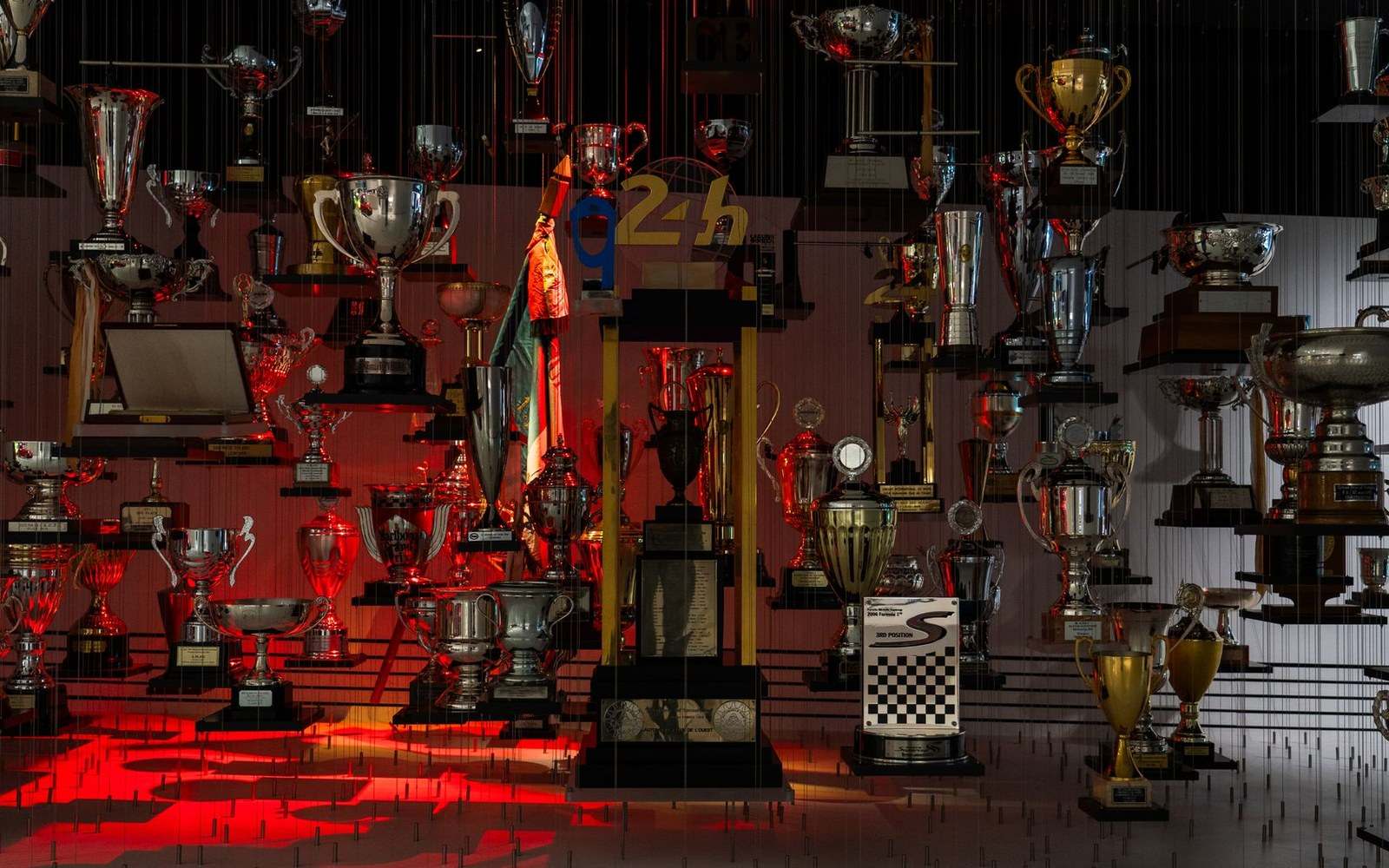
The world trophy, won in 2025 by a player who held no tour card when the tournament began.
Photo: Nick Gorniok / PexelsThe Tribunal and What It Found
The WPBSA disciplinary process that ended Zhao Xintong's first stint on the professional tour was one of the largest match-fixing cases in snooker's recorded history. In late 2023, the tribunal concluded its findings against ten players, Zhao among them, having examined conduct relating to the deliberate losing of frames in exchange for financial reward. The panel's published record identified Zhao as among the most seriously implicated. His ban was set at twenty months — substantial, though shorter than some of the other sanctions handed down in the same round of hearings, reflecting factors the panel set out in its written reasoning.
Zhao lost his tour card and his ranking points simultaneously. Points earned on the WST circuit are attached to the card-holder who earned them; when the card is withdrawn following a disciplinary finding, the ranking is voided rather than merely paused. He had, at the time of the ban, been ranked inside the world's top thirty and had won the 2021 UK Championship — the second Chinese player to win that event, after Ding Junhui. That title remained on the record. The ranking did not.

Qualifying runs several tables at once in a sports hall, with almost nobody in the seats.
Photo: Joshua Santos / PexelsThe match-fixing findings covered conduct that the WPBSA's own governance documents categorise as a fundamental breach of the sport's integrity rules. No part of the disciplinary record suggests any impropriety in Zhao's competitive play at events where match-fixing was not alleged, including the UK Championship final. The tribunal's published conclusions are the only source this publication relies on for the disciplinary period; no characterisation here goes beyond what that record states.
Return: Amateur Qualifying and What It Actually Required
When Zhao's ban expired he was, in competitive terms, nobody. No ranking, no tour card, no seeding of any kind. The mechanism available to him was the same one available to any player seeking a route back to the professional circuit: Q School, run by the WPBSA, in which amateur and lapsed professionals compete for tour cards on the WST, and the open qualifying competition structure that feeds into the World Championship itself.
The tribunal published dated findings against ten players; two of them were banned for life.
Photo: SHOX ART / PexelsThe World Championship qualifying rounds at the English Institute of Sport in Sheffield take place across several weeks before the Crucible event opens. They are not broadcast prominently, they are played in a functional sports hall rather than a theatre, and the draw offers no favours on the basis of history or reputation. Zhao entered as a qualifier and played four matches to reach the Crucible. Four matches, each a best-of format requiring him to close out a result, each against opponents who had every incentive to end his return journey before it became a story.
That journey became a story anyway. Professional snooker's community is not large, and word of how Zhao was playing — the quality, the composure, the century breaks compiling at a rate that recalled his pre-ban form — reached the main draw players before he got there. By the time he entered the Crucible as a qualifier, the bracket had arranged itself such that he faced successively higher-ranked opponents, each of whom carried advantages in experience at the venue and in match practice from a full professional season he had sat out entirely.
He did not lose a match at the Crucible. Not one.
The Final: 18–12, and What That Scoreline Means
Mark Williams came into the 2025 World Championship final as one of the most experienced players ever to stand on that stage. Three world titles — 2000, 2003 and 2018 — put him in a narrow group alongside only the sport's definitive champions. He was fifty years old, still holding a tour card on merit, still capable of winning frames at the highest level through a game built on ruthless positional efficiency and a safety play so accurate it makes opponents score against themselves.
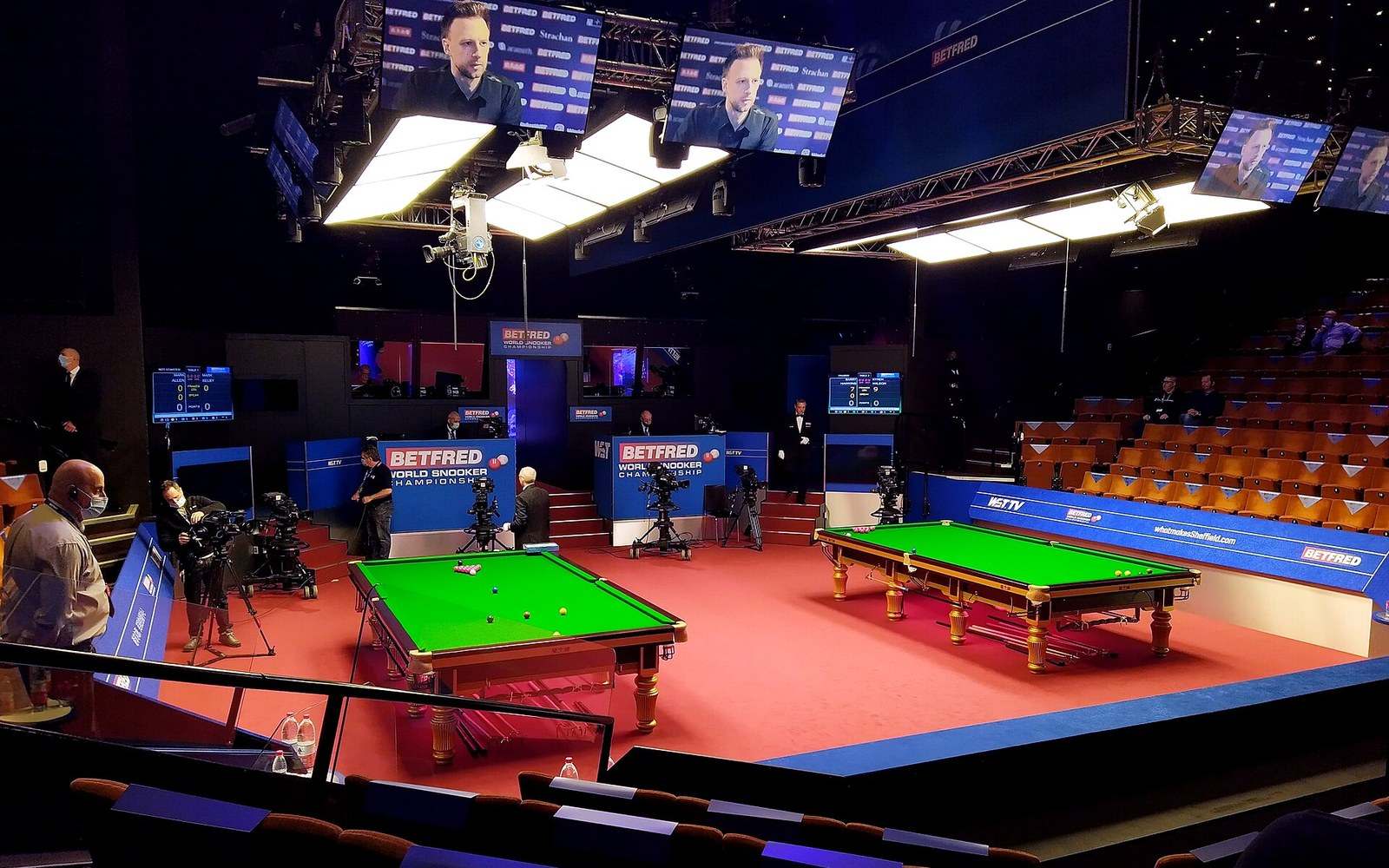
Two tables, a divider between them until the quarter-finals, and 980 seats around them.
Photo: 2021 World Snooker Championship table setup · Wikimedia CommonsZhao won 18–12. The margin does not fully capture how controlled the match was in its later stages. Williams took the first session competitively, and the overnight score at the end of day one was close enough that any assessment of a foregone conclusion would have been wrong. What changed across the second and third days was Zhao's capacity to construct breaks under pressure and his willingness to play the safety exchanges without flinching — a quality that, given everything the previous twenty months had required of him, probably surprised no one who had watched the qualifying rounds.
Eighteen frames to twelve in a World Championship final represents a clear winning margin without being a demolition. Over thirty frames, it means Williams won twelve — evidence of a match genuinely contested. It is not a scoreline that flatters the loser or diminishes what Zhao had to produce to achieve it.
What It Means for the Rankings and for the Tour
The practical consequences of a World Championship win for a qualifier begin immediately and are large. The winner's prize at the Crucible is the biggest single pay-day in snooker, and the ranking points attached to that result move Zhao from unranked to a position that will be clarified once the post-championship list is published by the WST. He will hold a tour card by right as world champion; that right is not contingent on Q School performance or prior ranking position.
For the tour itself, the 2025 World Championship produced a narrative that the sport's commercial operators could not have scripted and would not have dared to pitch: a player who had been expelled from the circuit for the gravest category of misconduct, served his ban in full, returned through the humblest available route, and won the sport's most prestigious event at the end of it. The Crucible Theatre's 980 seats were full for the final, the BBC's coverage ran to the customary late hours, and the result will be referenced for years whenever snooker discusses what its qualifying structure is actually for.
Whether the story reads as redemption, as a structural argument for open qualification, or simply as sport doing what sport occasionally does — producing outcomes nobody planned — depends on who is making the argument and what they want from it. What the record shows is exact: twenty months banned, four qualifying rounds played, one 18–12 final won, one world title confirmed. The path was not straightforward. The result was.