Aramith's Phenolic Claim, and What the Ball Actually Has to Do
The Belgian manufacturer's tournament balls have held the professional contract for decades. The material science behind them is specific, and the consequences of failure at the Crucible are immediate.
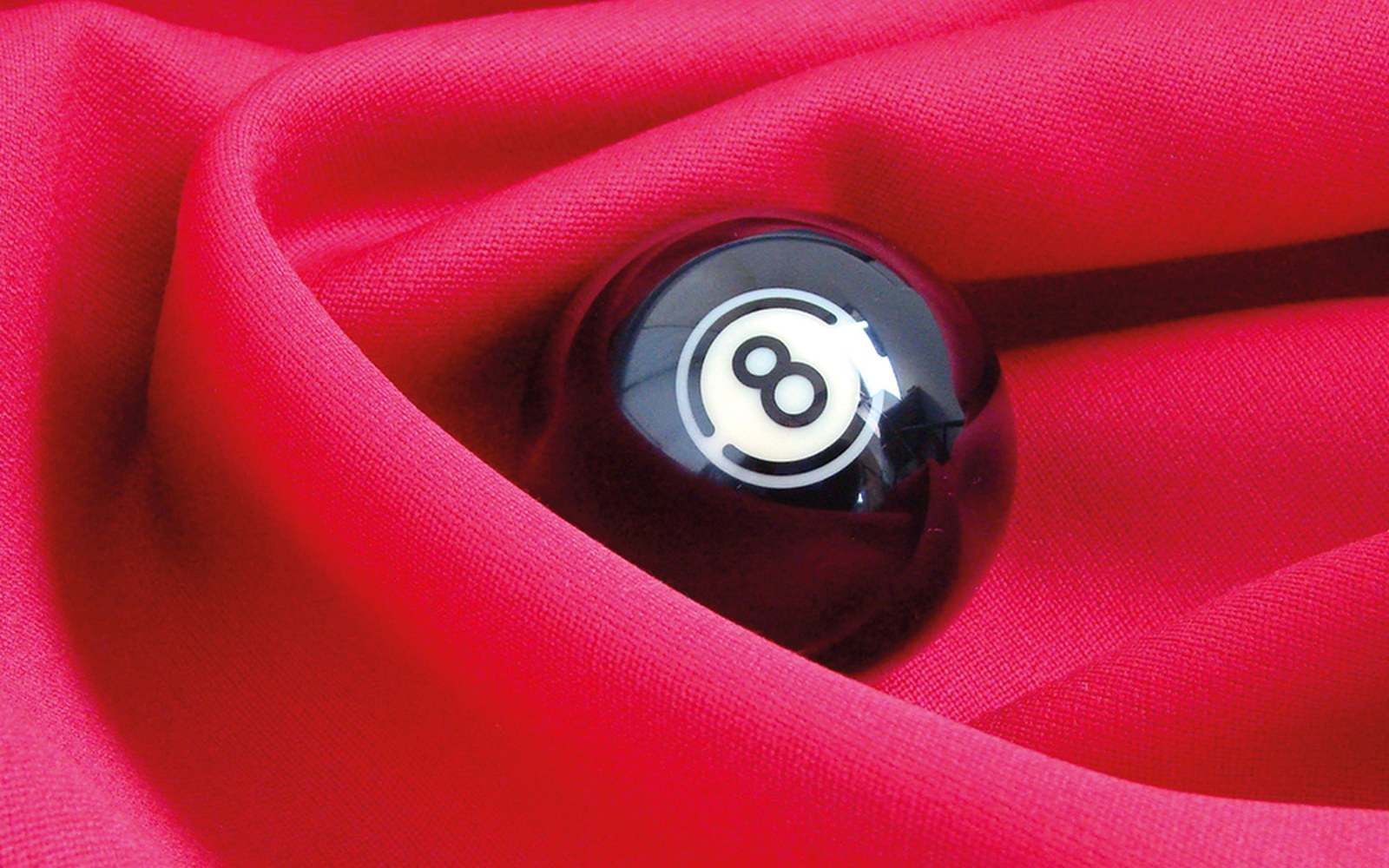
52.5 mm of phenolic resin, matched to within two hundredths of a millimetre across a tournament set.
Photo: aramith.comWhat Phenolic Resin Is, and Why Polyester Fails the Test
Saluc, the Belgian company that makes Aramith balls, bases its tournament claim on a single material distinction: phenolic resin rather than polyester. The difference is not cosmetic. Phenolic resin is a dense thermosetting compound, cured under heat and pressure into a structure that resists chipping, crazing and the transfer of chalk residue in ways that polyester composites cannot match. A polyester ball softens fractionally under repeated impact and begins to develop micro-fractures at the surface; at professional pace, on a slate bed levelled to sub-millimetre tolerances, that degradation becomes visible in how the ball rolls and deflects.
The hardness and thermal stability of phenolic resin underpin what Saluc calls the Aramith tournament standard: each ball must sit within a diameter tolerance of ±0.02 mm from the nominal 52.5 mm, with a roundness and weight specification tight enough that any ball in a tournament set behaves identically to any other. At the Crucible Theatre, where a World Championship frame can turn on a millimetre of side at distance, a ball that is fractionally out of round is a ball that costs a player a session.
The referee calls the miss, and the miss is a tactic as much as it is a penalty.
Photo: Tima Miroshnichenko / Pexels
Chalk worn to a cup.
Photo: Alex Urezkov / PexelsWhat Happens When a Ball Fails
The referee is the first line of inspection. Under World Snooker Tour match conditions, a referee who detects a chip, flat or crack on any ball stops play immediately; the ball is replaced from the spare set kept at the table, and the frame continues without a re-rack unless the damaged ball has already influenced the current shot in a material way. The replacement set is checked before every session by the tournament's equipment officer, not at the start of the match.
A chipped ball at the Crucible is not an abstract problem. The nap of Strachan 6811 cloth runs at a consistent angle across the table surface, and any surface irregularity on the ball interacts with that nap unpredictably. Tournament cloth specification requires a playing surface that assumes a geometrically perfect sphere; the ball itself is the other half of that contract.
Saluc has supplied the World Championship since the sport's modern professional era. No rival manufacturer has displaced that contract at ranking-event level, which is less a commercial lock-in than a tolerance argument: no polyester-based ball has yet been submitted that meets the same specification under independent testing. Until one is, phenolic resin remains the only material the Crucible trusts to sit still on the spot.